How to Move from Spreadsheets to a Repeatable RFP Workflow
A practical migration plan for teams that have outgrown scattered spreadsheets, shared folders, and email-based proposal reviews.
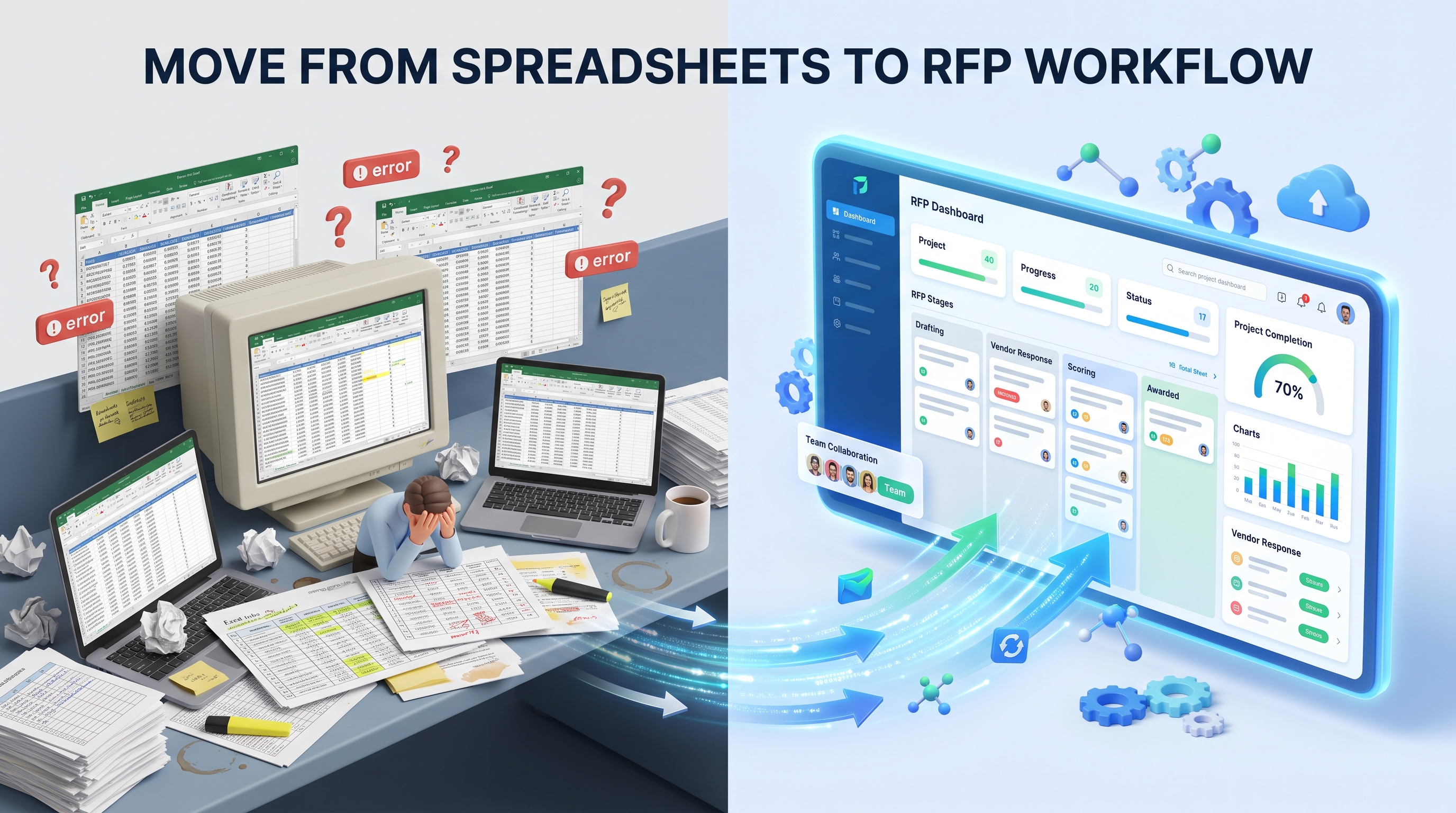
Spreadsheets are a reasonable place to begin an RFP process. They become difficult to manage when the team needs multiple versions, subject-matter review, supporting documents, and a reliable record of what was submitted.
Moving away from spreadsheets does not require migrating everything at once. A focused transition is easier to test and easier for the team to adopt.
Step 1: Choose One Representative Project
Select a recent questionnaire with recurring questions and several reviewers. Avoid starting with the most unusual or politically sensitive project. The goal is to learn where the current process loses time.
Step 2: Collect the Source Material
Gather the policies, product documentation, prior responses, and buyer instructions used for that project. Keep the original files available while you validate the new workflow.
Step 3: Separate Questions from Answers
Record the buyer's exact question separately from the response draft. This makes it easier to search by intent and spot when an old answer does not fully address a new question.
Step 4: Define Review States
Use clear states such as draft, needs subject-matter review, approved for reuse, and submitted. The labels matter less than making ownership and next action visible.
Step 5: Measure the Pilot
Compare the pilot with a similar earlier project. Track time spent searching, number of review cycles, unanswered questions, and the time required to prepare the final submission.
Step 6: Expand Deliberately
After the pilot, add the next group of high-frequency questions and invite the teams that review them most often. Retire duplicate or stale entries as you go.
ProposalVault can provide the shared workspace for this transition, while your team remains responsible for verifying every customer-facing commitment. The aim is not to remove judgment from the process; it is to stop spending judgment on finding the same information repeatedly.
For the principles behind a strong library, read How to Keep an RFP Answer Library Accurate and Current.
Put the workflow into practice
Start with a focused project and give your team a shared place to organize questions, documents, and responses.